
The digital transformation of using LIMS software can bring powerful advantages: greater efficiency, accuracy, and compliance. But understanding the implementation process for LIMS software is just as crucial as evaluating product features. Some expect a plug-and-play solution, while others underestimate the effort required for data migration, system integration, and user adoption. The truth? Careful planning and the right support can make all the difference. Here’s what you need to know about implementing LIMS software Plus, learn practical tips to ensure project success and lasting value.
What Is LIMS Software, and Why Does Implementation Planning Matter?
LIMS software (Laboratory Information Management System) automates and manages core lab processes, from sample tracking and workflow management to regulatory reporting. Planning your LIMS implementation is essential; however, many labs underestimate the complexity and time required.
Typical Pain Points During LIMS Implementation
Delays
Without the right expertise, unclear goals/inadequate planning creates problems.
Complexity
Custom workflows and compliance needs can bog down implementation.
Resource Constraints
Not enough internal expertise or time slows things down.
Data Migration Challenges
Legacy systems in particular can make the process more complex.
This is why you need a seasoned team like BTSOFT by your side. We’ll help clients anticipate and overcome these issues, simplifying the journey toward improved lab operations.
The 5-Phase LIMS Implementation Roadmap
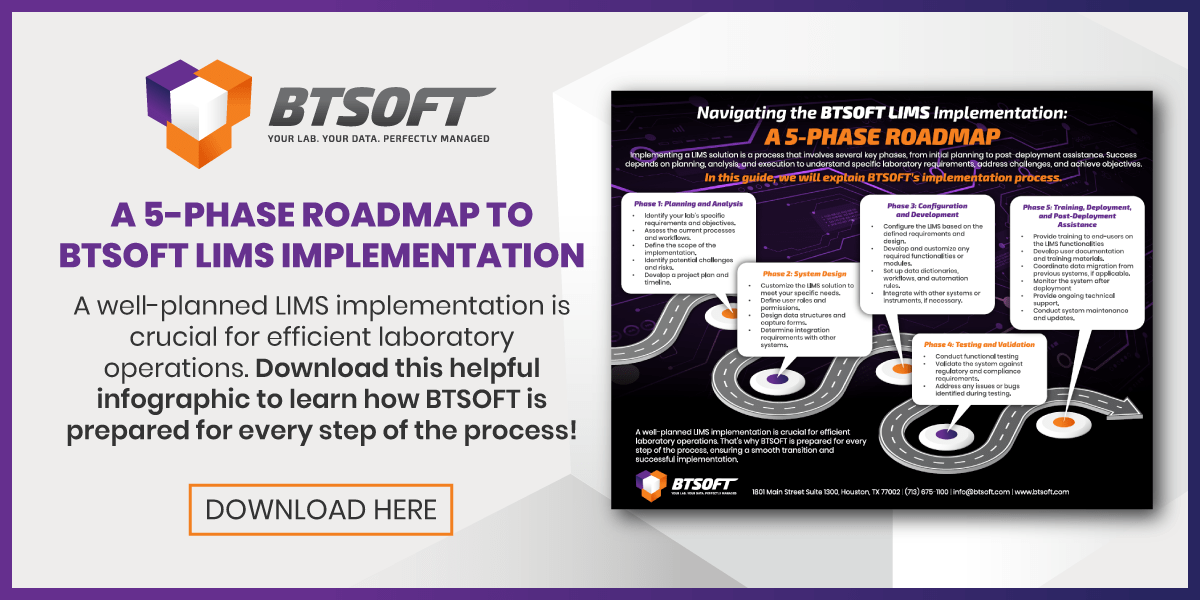
Successful LIMS software implementation follows a tested roadmap ensuring clarity and alignment along the way. Here’s how BTSOFT approaches it:
Phase 1: Planning & Analysis
The process begins with thorough planning and assessment. This phase is all about understanding your laboratory’s unique needs, defining project goals, and closely examining current processes and workflows. Setting realistic timelines and identifying potential challenges early on helps establish a solid foundation. Our team works with you to map out the project scope, prioritize objectives, and develop a detailed implementation plan that aligns with both laboratory and stakeholder expectations.
Phase 2: System Design
With a clear plan in place, we move into system design. Here, the focus shifts to customizing LIMS software to mirror your lab’s compliance requirements, workflow nuances, and reporting needs. User roles, permissions, data structures, and integration touchpoints with legacy or third-party systems are defined and configured. This meticulous design phase ensures the new system fits naturally into your lab’s operations and regulatory environment.
Phase 3: Configuration & Integration
Next comes configuring and developing the LIMS to bring your tailored design to life. The software is set up according to your defined specifications, with modules and functionalities customized as needed. Whether it’s automating routine tasks, building out data dictionaries, or integrating with instruments and external software, this phase transforms planning into a fully functional solution ready for real-world lab demands.
Phase 4: User Training & Testing
Before go-live, the system undergoes rigorous testing and validation. Comprehensive functional tests ensure everything works as intended, while validation processes confirm compliance with all necessary laboratory and industry regulations. Any bugs or issues identified are promptly addressed, and the system is refined to guarantee reliability and accuracy.
Phase 5: Go-Live & Ongoing Support
The final phase focuses on empowering your team and ensuring smooth day-to-day use. End users receive hands-on training; detailed documentation and support materials are provided. If migrating from a previous system, data transfer is carefully managed for integrity and completeness. Once the LIMS software is deployed, ongoing monitoring and support kick in, giving your lab access to expert assistance, troubleshooting, regular maintenance, and updates whenever needed.
How Long Does LIMS Implementation Take?
Implementation timelines vary—anywhere from a few weeks for simple labs to several months for larger, multi-site organizations. Key variables include:
- Lab size and complexity
- Degree of configurations
- Data migration needs
- Internal stakeholder availability
- Regulatory or compliance requirements
BTSOFT’s structured, client-centric approach can help shorten deployment, especially for labs prepared to engage actively during the process.
Lab Checklist: Streamlining Your LIMS Software Implementation
To make your LIMS deployment as smooth as possible, prepare your team and resources ahead of time:
Ensure data readiness:
Audit and clean existing records for migration
Appoint project leads:
Identify internal champions to liaise with BTSOFT experts
Prioritize communication:
Foster collaboration between laboratory, IT, and vendor
User training:
Schedule comprehensive training sessions for personnel
These steps empower a faster, more effective LIMS software adoption for your laboratory.
Choose BTSOFT for Streamlined LIMS Software Implementation
BTSOFT offers unmatched experience delivering customizable, efficient LIMS solutions like ALPACA LIMS for labs of all sizes and specialties. With proven methodologies, strong project management, and ongoing support, our team partners with you throughout your digital transformation journey.
Let’s take the next step toward empowering your team with ALPACA LIMS. Schedule your free demo and say hello to a streamlined, data-driven laboratory.
Want to have a easy cheat sheet to remember the implementation process? Download our infographic and keep track of each step!